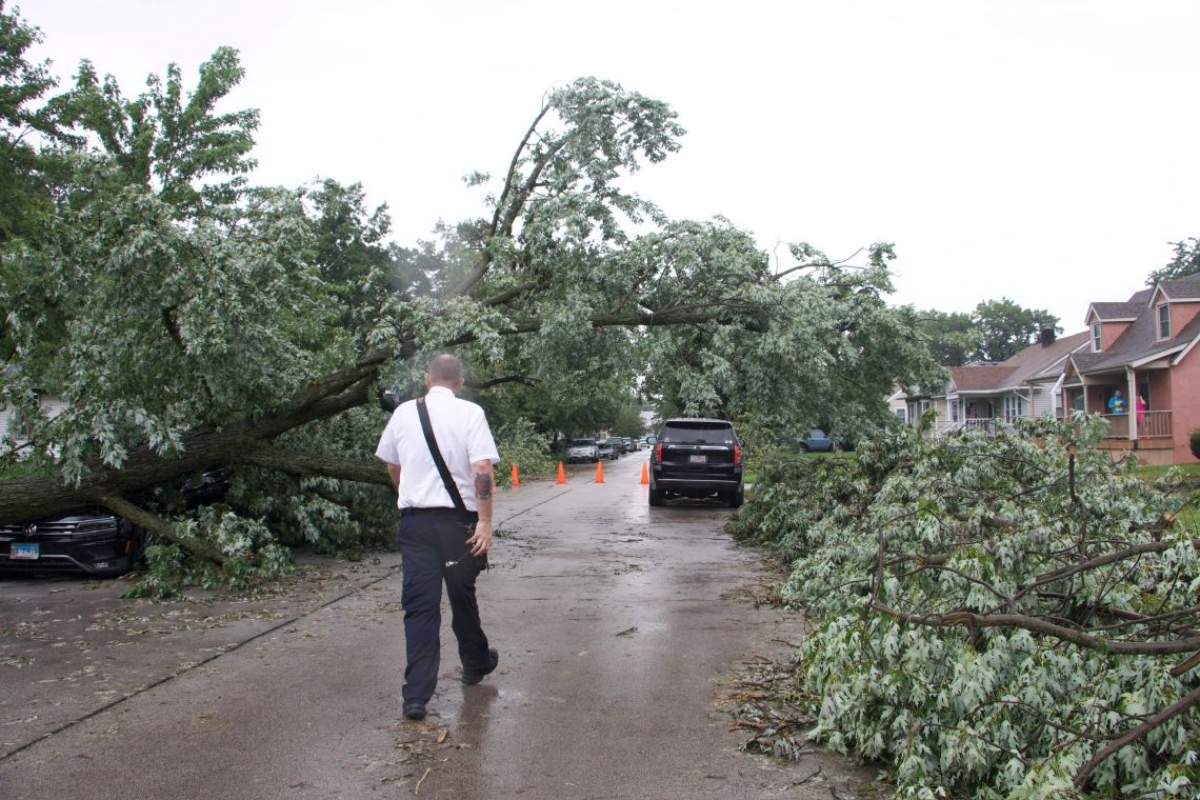
Chicago, IL (CAPITOL NEWS ILLINOIS) – Gov. JB Pritzker issued a proclamation Tuesday to bring financial help to 15 Illinois counties pounded by severe and record-breaking storms over recent weeks.
The proclamation, which took immediate effect, is intended to mobilize resources for debris removal and repairs to public infrastructure and will give small, rural communities the opportunity to apply for disaster relief funding of up to $250,000.
“I know these storms have impacted countless Illinois families and requires we band together to help them recover,” Pritzker said in a statement announcing the proclamation. “As this relentless and unprecedented weather continues to wreak havoc across our region, I remain committed to ensuring those impacted get the resources and help they need.”
This money is not available to individuals seeking storm damage relief, who instead must apply for assistance through the Federal Emergency Management Agency.The move comes after Pritzker toured storm damage in Lansing last week and signed a new law intended to help homeowners in Chicago access financial relief to repair damage after flooding, legislation that was passed in response to significant flooding on the Southwest Side of Chicago last summer.
Read more: Pritzker tours storm damage, signs flood relief bill expanding local Chicago programs
Illinois residents have endured a pattern of severe weather events this year, from heavy rainfall and flash flooding to a record-breaking number of tornadoes — over 200 as of mid-August.
According to reporting by NBC5, the state with the next-highest count this year is Indiana, which had fewer than 100 confirmed tornadoes as of Monday.
The 15 counties eligible for relief under the governor’s proclamation are Alexander, Champaign, Cook, DuPage, Ford, Fulton, Kane, Lake, LaSalle, Marshall, McLean, Pulaski, Tazewell, Vermillion and Will counties.
Communities in those areas are now eligible to apply for disaster response funding through the Department of Commerce and Economic Opportunity’s Community Development Block Grant.
The program, funded by the U.S. Department of Housing and Urban Development, will provide reimbursement for storm cleanup, debris removal and public infrastructure repairs.
Funding applications must be submitted within six months of the Aug. 18 proclamation.
The proclamation also facilitates the deployment of state personnel and equipment to assist in storm cleanup if requested by local authorities and relieves traditional procurement constraints to help communities more quickly make emergency purchases of specialized equipment needed for storm cleanup.
Ben Szalinski contributed reporting.
Capitol News Illinois is a nonprofit, nonpartisan news service that distributes state government coverage to hundreds of news outlets statewide. It is funded primarily by the Illinois Press Foundation and the Robert R. McCormick Foundation.